AI-Assisted Across All Disciplines
Research Paper Writing
Guide to Agent Skills and the MCP Technical Framework
Key Takeaways
- Agent Skills: Modular intelligent skills that encapsulate complex research workflows
- MCP Protocol: Standardized external system integration enabling plug-and-play functionality
- Full-Cycle Coverage: Complete research lifecycle from hypothesis generation to paper publication
- Human-AI Collaboration: AI handles routine tasks while researchers lead creative decision-making
Definition of Core Concepts and Technical Foundations
Gain an in-depth understanding of the technical essence of Agent Skills and MCP, establishing a theoretical foundation for AI-assisted research across all disciplines
Agent Skills: A Revolutionary Paradigm in Agentic Capabilities
Definition and Core Characteristics
According tothe open standard released by Anthropic in December 2025, Agent Skillsit is defined as "reusable AI capability modules that transform general-purpose large language models into domain-specific expert agents". This technology represents a fundamental shift from "prompt engineering" to "capability engineering".
Progressive Disclosure Architecture
Loads only skill names and descriptions at startup, full instruction files upon trigger, and reference documents on demand during execution
Modular Capability Encapsulation
Encapsulates domain knowledge, workflows, best practices, and validation rules into independent, composable capability units
Technical Architecture
| Component Level | File/Directory | Functional Description | Loading Timing |
|---|---|---|---|
| Metadata Instructions | SKILL.md | YAML Front Matter + Markdown Execution Instructions | Full content loaded upon trigger |
| Executable Scripts | scripts/ | Automation scripts in Python, JavaScript, Shell, etc. | Called on demand during execution |
| Reference Documentation | references/ | Domain knowledge bases, methodological literature, formatting guidelines | Dynamically loaded upon query |
| Digital Assets | assets/ | Template files, configuration files, sample data | Read on demand during rendering |
Technology Stack Positioning and Synergies
Prompt
Atomic-Level Single Instructions
Function Calling
Operation-Level Tool Invocation
MCP
Interface-Level Connection Protocols
Skills
Task-Level Workflow Orchestration
MCP: The Standardization Revolution of Model Context Protocol
Protocol Definition and Core Concepts
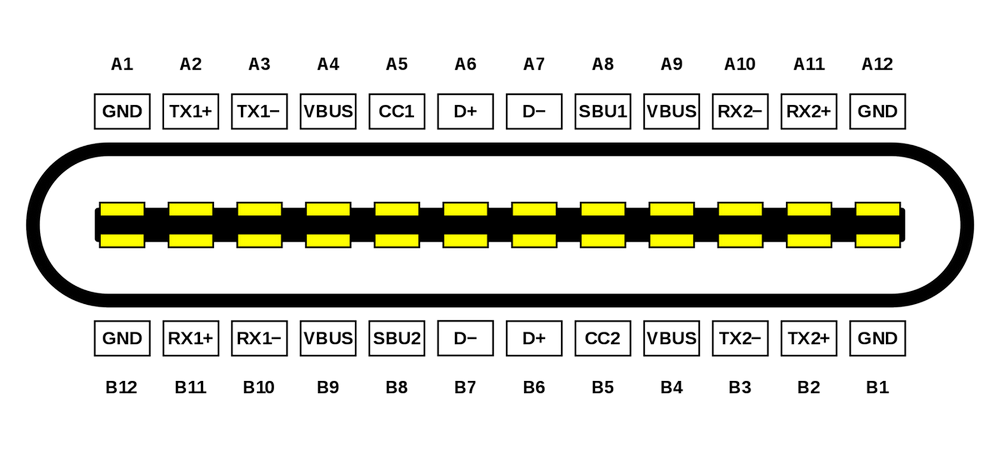
Model Context Protocol(MCP)Launched by Anthropic in November 2024, hailed as "the USB-C port for AI." Just as USB-C unified connectivity for electronic devices, MCP aims to unify the connection between AI systems and the external world, eliminating the need to write custom integration code for every new data source or tool.
Plug-and-Play
Standardized connection interface
Secure and Reliable
Built-in permissions and authentication mechanisms
Infinite Scalability
Supports diverse data sources
Core Component Architecture
Hosts
Manage user sessions, coordinate Clients, handle UI/UX
Clients
Establish connections with Servers, forward requests, receive responses
Servers
Encapsulate specific data sources or tools, expose standardized interfaces
Four-Stage Communication Protocol
Discovery Phase
Version negotiation, authentication, capability probing
Capability List
Detailed enumeration of tools/resources/prompts
Selection and Usage
Tool invocation parameter generation and validation
Execution and Return
Result transmission, error handling, status updates
AI-Assisted Framework for the Entire Research Lifecycle
Hypothesis Formulation
AI as a creativity catalyst, humans make value judgments
- • Literature review and knowledge synthesis
- • Research question generation and refinement
- • Trend analysis and gap identification
Hypothesis Validation
AI as an execution accelerator, humans lead interpretation
- • Experimental design and method selection
- • Data collection and analysis
- • Result interpretation and validation
Paper Publication
AI as a quality enhancer, humans retain decision-making authority
- • Academic writing and formatting standards
- • Peer review and revision
- • Journal submission and publication
Principles of Human-AI Collaboration Boundaries
Tasks Suitable for AI
-
Rule-Based: Standard operations such as citation formatting, data cleaning, etc.
-
Labor-Intensive: Time-consuming tasks such as literature deduplication, format conversion, etc.
-
Verifiable: Checkable outputs such as statistical calculations, chart generation, etc.
Tasks That Must Be Led by Humans
-
Value-Laden: Setting research objectives, judging significance
-
Creative: Proposing core hypotheses, theoretical innovation
-
Accountability: Final Decision-Making and Academic Accountability
Pre-Research Phase: Intelligent Literature Review and Hypothesis Generation
AI-driven literature retrieval, knowledge synthesis, and research question refinement to build a solid research foundation
Automated Literature Retrieval and Knowledge Synthesis
arXiv-MCP Server Configuration
According toTRAE SOLO 3.0 Practical Guide, configuring the arXiv-MCP Server requires specifying an API key and working directory to ensure secure credential management and flexible project switching.
Intelligent Multi-Source Literature Aggregation

Preprint Platforms
arXiv, bioRxiv, SSRN - Timeliness and Openness
Traditional Journals
Quality Assurance and Comprehensive Records
Conference Papers
Technical Frontiers and Rapid Iteration

Patent Literature
Technical Details and Business Perspectives
Research Trend Identification and Knowledge Gap Analysis
Trend Identification Techniques
-
Time-Series Semantic Analysis: Tracking the evolution of concept clusters
-
Citation Burst Detection: Identifying emerging hotspot papers
-
Cross-Domain Flow Tracking: Identifying methodological transfer pathways
Gap Analysis Dimensions
-
Methodological Gaps: Absence of methods for specific scenarios
-
Theoretical Framework Gaps: Insufficient explanatory theories
-
Evidence Base Gaps: Lack of research on specific populations
Research Question Refinement and Hypothesis Construction
Socratic Guidance Mode

Through continuous questioning and reflection, gradually peel away surface-level characteristics to reach core knowledge needs. academic-research-skills Project Adopts the SCR Loop (State-Challenge-Reflection) structure to ensure systematic deepening of inquiry.
Testable Hypothesis Generation
Concept Operationalization
Transforming abstract theoretical concepts into measurable indicators
Relationship Prediction
Specify the expected direction, form, and conditions of relationships between variables
Evidence Standards
Specify statistical significance levels and effect size criteria
Preliminary Research Feasibility Assessment
| Assessment Dimensions | Key Considerations | AI-Assisted Features | Output Format |
|---|---|---|---|
| Resources | Data accessibility, equipment requirements, funding budget | Identify data sources, estimate costs | Resource requirement list, acquisition strategy |
| Methods | Design fit, execution capability, methodological risks | Method selection decision tree, risk identification | Method assessment report, alternative options |
| Timeline | Phase breakdown, critical path, bottleneck identification | Empirical estimation, parallelization suggestions | Gantt chart-style timeline, risk annotations |
Systematic Review and PRISMA Workflow Automation
Intelligent Search Strategy Optimization
PICO Framework Application
Boolean Logic Construction
OR broadens scope, AND narrows scope, NOT excludes specific terms, NEAR restricts term proximity
Literature Screening and Quality Assessment
Title-Abstract Screening
AI predicts inclusion probability based on text classification models
Full-Text Screening
AI automatically extracts key features to generate structured summaries
Quality Assessment
Automated checking based on CONSORT/STROBE guidelines
Evidence Synthesis Framework Generation
Quantitative Synthesis (Meta-Analysis)
- • Automatically calculate effect sizes and select appropriate formulas
- • Heterogeneity assessment (I² statistic)
- • Publication bias detection (Funnel plot, Egger's test)
- • Sensitivity analysis design
Qualitative Synthesis
- • Thematic Analysis and Common Theme Identification
- • Variation Pattern and Theoretical Link Mining
- • Structured Synthesis Matrix Generation
- • Conclusion Transparency Annotation
Mid-Research Phase: Intelligent Experimental Design and Data Analysis
AI-assisted intelligent workflow for research method matching, experimental design optimization, and data processing
Intelligent Matching and Optimization of Research Methods
Quantitative/Qualitative/Mixed Methods Selection Recommendations
Quantitative Methods
Suitable for testing pre-set hypotheses, measuring variable relationships, and statistical generalization
Qualitative Methods
Suitable for exploring complex phenomena, understanding subjective experiences, and theory construction
Mixed Methods
Integrating quantitative and qualitative approaches to answer "what" and "why"
Experimental Design Template Generation
Control Group Setup
- • Control types: No treatment, placebo, standard care
- • Blinding implementation: Single-blind, double-blind, triple-blind designs
- • Inter-group balance: Statistical adjustment of baseline characteristics
Sample Size Calculation
- • Expected effect size: Based on prior research or clinical significance
- • Statistical parameters: α=0.05, power=80% or 90%
- • Design adjustments: Multi-group comparisons, multiple endpoint corrections
Randomization Scheme
- • Randomization methods: Simple, block, stratified randomization
- • Allocation concealment: Central randomization system, coded envelopes
- • Sequence generation: Computer-generated random sequences
Research Ethics Compliance Check
Human Subject Protection
- • Informed consent: Adequacy of information, assurance of voluntariness
- • Risk-benefit assessment: Risk minimization, benefit justification
- • Privacy protection: Data de-identification, secure storage
Animal Experiment Ethics
- • 3Rs Principle: Implementation of replacement, reduction, refinement
- • Animal welfare: Humane handling, scientific endpoint determination
- • Ethics Approval: IACUC Review Requirements
Value of AI Assistance
Systematic risk identification, flagging potential issues based on historical data, and providing improvement suggestions
Intelligent Workflow for Data Processing
Data Cleaning and Preprocessing
Quality Diagnostics
- • Completeness Check: Missing Value Pattern Recognition
- • Accuracy Check: Outlier Detection
- • Consistency Check: Duplicate Record Identification
Cleaning Operations
- • Missing Value Handling: Multiple Imputation Strategies
- • Outlier Handling: Winsorization
- • Variable Transformation: Standardization, Normalization
Statistical Analysis Method Recommendations
Academic Figure Automation
Chart Type Selection
- • Distribution: Histograms, Density Plots, Box Plots
- • Comparison: Bar Charts (Error Bars), Forest Plots
- • Association: Scatter Plots (Fitted Lines), Heatmaps
- • Time Series: Line Charts, Area Charts
- • Models: Coefficient Plots, ROC Curves
Academic Standard Requirements
- • Self-explanatory: Complete titles and annotations
- • Precision: Adherence to disciplinary conventions
- • Accessibility: Color-blind friendly
- • Resolution: 300 dpi print quality
Intelligent Validation of Research Findings
Identification of Internal Validity Threats
| Threat Type | AI Identification | Mitigation Strategy |
|---|---|---|
| Selection Bias | Baseline Imbalance | Randomization, Matching, Statistical Adjustment |
| Measurement Bias | Systematic Differences | Standardized Measurement, Blinded Assessment |
| Confounding Variables | Causal Diagram Analysis | Design Control, Statistical Adjustment |
| Attrition Bias | Missing Pattern Tracking | Intention-to-Treat Analysis, Multiple Imputation |
Sensitivity Analysis and Robustness Checks
Model Assumption Sensitivity
- • Distributional Assumptions: Alternative models for normality
- • Functional Form: Linear vs. Non-linear Modeling
- • Interaction Effects: Interactions among key variables
Analytical Method Sensitivity
- • Comparison of Missing Data Handling Strategies
- • Impact of Outlier Handling Strategies
- • Parametric vs. Non-parametric Method Comparison
Data Subset Sensitivity
- • Result Stability Across Different Time Windows
- • Stratification Consistency of Key Covariates
- • Leave-One-Out Method in Meta-Analysis
Value Mining and Standardized Reporting of Negative Results
Value Mining Strategies
-
Authenticity Identification: Distinguishing true negatives (sufficient power) from false negatives (insufficient power)
-
Boundary Condition Exploration: Identifying subgroups or contexts where effects emerge
-
Theoretical Explanation: Whether theoretical assumptions need revision or moderating mechanisms need to be identified
Standardized Reporting Requirements
-
Complete Statistical Information: Effect size, confidence interval, exact p-value
-
Power Analysis: Post-hoc power or minimum detectable effect size
-
Evidence Integration: Contribution to the evidence base for meta-analysis
Core Value: Countering publication bias, encouraging complete and transparent reporting, and enhancing the overall reliability of scientific literature. Tencent Cloud Developer Guide Emphasizing that the scientific value of negative results must not be overlooked.
Paper Writing: Phased Intelligent Writing System
AI-driven full-process support for academic writing, offering intelligent solutions from style calibration to citation management
Pre-writing Style Calibration and Structural Planning
Automatic Adaptation to Target Journal Formatting

academic-research-skills Project The built-in Academic Paper Skill supports multi-format output, including Markdown, DOCX, LaTeX, and more.
Style Calibration Technology
Style Feature Extraction
Analyzing researchers' previous papers to extract writing style features
IMRaD Structure Variants and Disciplinary Differences
| Discipline | Structural Characteristics | Key Variants |
|---|---|---|
| Medicine/Life Sciences | Strict IMRaD structure, emphasizing methodological reproducibility | CONSORT, STROBE, PRISMA extensions |
| Psychology/Social Sciences | Detailed methodological description, explicit theoretical framework articulation | Thematic organization in qualitative research, parallel mixed methods |
| Computer Science/Engineering | Concise method description, highlighting experimental results | Algorithm-experiment structure, ablation studies |
| Humanities | Thematic organization, narrative argumentation | Theory-text-criticism cycle, historical context tracing |
Author Contribution Statements and Conflict of Interest Disclosures
CRediT Contributor Roles
Academic Paper Skill Supports automatic declaration generation for 14 contributor roles
Conflict of Interest Check
Intelligent Section-by-Section Generation and Optimization
Abstract and Title Optimization
The Abstract Bilingual Agent supports English-Chinese bilingual output, following the inverted pyramid structure of "Background-Gap-Methods-Findings-Significance".
Keyword Optimization
Compares recent papers in the target journal to suggest terminology combinations that align with field conventions while maintaining distinctiveness
Multi-Style Titles
Introduction Logic Flow
Research Background
Establishes field significance, quantifies activity levels, identifies seminal literature
Literature Gap
Critical review, establishes research necessity, identifies limitations through comparative analysis
Research Objectives
Clarifies approach to filling the gap, proposes specific hypotheses, previews key findings
Quality Check
The Writing Quality Check Agent flags issues such as over-citation and vague gap descriptions
Methods Reproducibility
Study Design
Type, timeframe, design rationale
Participants/Materials
Sampling strategy, inclusion criteria, sample size calculation
Procedures and Data Analysis
Data collection steps, statistical methods, analysis plan
Objective Presentation of Results
Multi-Level Organization
- • Primary Outcomes (Core Hypotheses)
- • Secondary Outcomes (Exploratory Analyses)
- • Subgroup Analyses (Heterogeneity Exploration)
- • Sensitivity Analyses (Robustness Checks)
Statistical Reporting Standards
- • Prioritize effect sizes + confidence intervals
- • Exact p-values (not "p<0.05")
- • Appropriate effect size metrics
In-Depth Discussion Interpretation
Intelligent Academic Language Enhancement
Terminology Consistency Check
Term Identification and Extraction
Automatically identifies core domain terms and their variants from the literature library
Consistency Check
- • Inconsistent terminology flagging
- • Undefined abbreviations at first use
- • Varied expressions for the same concept
Style Consistency
Suggests standard terminology based on journal style guides
Logical Coherence Analysis
Paragraph transition check
- • Identifies logical leaps
- • Missing transitional markers
- • Redundant information detection
Argument Strength Assessment
- • Evidence type analysis (direct/indirect)
- • Support strength assessment (single/convergent)
- • Identification of weak evidence points
Argument Structure Visualization
Generates argument maps showing relationships between claims, evidence, and counterarguments
Language Style Optimization
Humanizer Skill
Specifically addresses "AI tone" by infusing a human touch
- • Removes typical AI phrases (e.g., "It is worth noting")
- • Opinionated statements
- • Rhythmic variation and acknowledgment of uncertainty
- • Natural use of the first person
Citation Management & Reference Automation
Multi-format citation conversion
Support for mainstream citation styles
Citation Compliance Agent
Automatically identifies journal requirements, batch-converts formats, and verifies completeness
Reference Manager Integration
Zotero-MCP Integration
- • Bi-directional sync: Save search results to personal library
- • Cite references directly from your library while writing
- • Automatic handling of CSL citation styles
- • Tag management and note synchronization
EndNote/Mendeley
Library interoperability via export/import interfaces
BibTeX Processing
Generate and clean BibTeX entries; handle special characters
Citation Accuracy Verification & Academic Integrity
Source Verification
- Cross-check in-text citations against the reference list
- Identify missing references and uncited bibliography entries
- Verify accuracy of key citation details
Plagiarism Prevention
- Training data contamination detection and paraphrasing suggestions
- Hallucinated citation prevention and mandatory verification
- Excessive self-citation detection and citation diversity recommendations
Citation Network Analysis
- Detect "citation club" phenomena
- Self-citation ratio calculation and threshold alerts
- Recommend a broader literature base
Multi-layer Verification Mechanism: Format check → API verification → Information validation → Content comparison, effectively preventing hallucinated citations and ensuring Academic Integrity. citation-verification skill Implements a complete verification workflow.
Paper Refinement: Intelligent Review & Iterative Revision
AI-assisted multi-perspective peer review, reviewer comment analysis, and pre-submission final check system
Multi-perspective Intelligent Peer Review
Methodologist Perspective
Rigor of Research Design
- • Alignment between design type and research questions
- • Appropriateness of sample representativeness and sampling strategy
- • Reliability and validity assessment of measurement instruments
- • Identification and control of confounding variables
Risk Rating
Domain Expert Perspective
Assessment of Theoretical Contribution
- • Comprehensiveness and timeliness of literature coverage
- • Accuracy of theoretical positioning (supporting/extending/challenging)
- • Assessment of novelty (first report/methodological improvement)
- • Academic value and potential impact
Limitations of AI Assistance
Functions primarily as an "early warning system": flagging obvious literature omissions or theoretical disconnects, rather than replacing in-depth expert judgment
Statistical Reviewer Perspective
Appropriateness of Data Analysis
- • Completeness of descriptive statistics (sample characteristics, missing data)
- • Correctness of inferential statistics (hypothesis testing, effect sizes)
- • Testing of model assumptions and handling of violations
- • Strategies for controlling multiple comparisons
Sensitivity Analysis
Robustness checks on key assumptions and assessment of result consistency
0-100 Quality Scoring System
Simulated 5-Member Review Panel
Editor-in-Chief (EIC)
Journal fit, novelty assessment
Methodological Reviewer
Research design, statistical appropriateness
Domain Reviewer
Theoretical contribution, literature coverage
Perspective Reviewer
Interdisciplinary and practical impact assessment
Devil's Advocate
Challenging core arguments, identifying logical fallacies
This multi-perspective design significantly enhances the comprehensiveness and constructiveness of the review, simulating the depth and breadth of real-world peer review.
Intelligent Parsing and Response to Review Comments
Comment Categorization and Prioritization
Substantive Revisions
Involving research design, data analysis, or core conclusions
Clarification of Expression
Questions or misunderstandings regarding methods, results, or arguments
Formatting Adjustments
Citation formats, figure/table standards, language style
Supplementary Suggestions
Additional analyses, literature, or discussion points
Response Letter Template Generation
Point-by-Point Response Structure
- Acknowledgments: Thank reviewers for specific suggestions
- Response Overview: Briefly explain adopted revisions or rationale
- Specific Revisions: Detail corresponding changes in the manuscript
- Revised Text: Provide key revised paragraphs (optional)
Rebuttal Strategy Guidance
- • For misinterpreted comments: Politely clarify and rewrite for clarity
- • For unfeasible suggestions: Explain limitations and propose alternatives
- • For disagreements: Provide additional evidence while maintaining academic respect
Professional Review Reminder
AI-generated response letter drafts require careful review by researchers to ensure professional tone and argument accuracy
Revision Tracking and Version Comparison
Automatic Revision Tracking
Use Word Track Changes or LaTeX changebar package to highlight all modifications
Version Comparison Summary
Generate summaries of structural changes, content additions/deletions, and statistical result updates
Revision Decision Log
Track handling status of each reviewer comment to support effective communication
These features facilitate effective communication among researchers, co-authors, supervisors, and journal editors, demonstrating the completeness and systematic nature of revisions. Transparent version management is especially critical for multi-author collaboration and long-term projects.
Pre-submission Final Check
Journal Submission Checklist Verification
Manuscript Completeness Check
- • Validation of all required section structures
- • Word count verification
- • Figure/table numbering and citation completeness
Author Information Verification
- • ORCID and institutional email format validation
- • Contribution statement completeness
- • Conflict of interest disclosure
Supplementary Materials Check
- • Data, code, and protocol files
- • Presence of ethics approval documents
- • Metadata completeness
Supplementary Materials Completeness Verification
Research Data
- • Raw data and processed analysis datasets
- • Data dictionaries and variable descriptions
- • Format appropriateness and metadata completeness
Analysis Code
- • Complete code for data cleaning, statistics, and visualization
- • Dependency environment documentation
- • Reproducibility verification
Protocol Files
- • Study protocols and pre-analysis plans
- • Ethics approval documents
- • Additional results and sensitivity analyses
Data Availability and Code Open-Sourcing
Data Availability Statement
- • Fully available: Open-access data repository
- • Restricted availability: Ethical or legal constraints
- • Unavailable: Justified explanation
Code Repository Preparation
- • README and LICENSE generation
- • Dependency file requirements.txt
- • Usage documentation
End-to-end quality assurance from research to publication
Research Transparency
Complete Materials and Methods Reporting
Data Credibility
Verifiable Data and Analysis Workflows
Reproducible Results
Complete Code and Operational Guides
Academic Integrity
Transparent Contribution Statements and Conflicts of Interest
Through systematic final checks, we ensure that submitted manuscripts are technically complete, methodologically rigorous, and ethically compliant, laying a solid foundation for successful publication. This process reflects the highest standards of modern academic publishing.
Technical Implementation: Development and Application of Agent Skills
Construction of academic research skill libraries, implementation of multi-agent collaboration systems, and deployment guides for mainstream platforms
Construction of Academic Research Skill Libraries
Open-Source Skill Library Reference: AI Research SKILLs

AI Research SKILLs Maintained by Orchestra Research, this comprehensive open-source skill library represents the most systematic and extensive engineering practice in the current field of AI-assisted academia. As of early 2026, the library includes87 meticulously designed skills organized into 22 functional categories, covering the entire lifecycle from research conception to paper publication.
Technical Features
- • Adheres to Anthropic's official Skill best practices
- • Standardized YAML frontmatter
- • Progressive disclosure directory structure
- • Constraint-first instruction design
Usage
Compatible with various AI coding agents including Claude Code, OpenCode, Cursor, Codex, and Gemini CLI
Discipline-Specific Skill Customization
Inheritance Layer
Reuses structures and workflow templates from general skills
Extension Layer
Adds specific modules tailored to disciplinary paradigms
Overlay Layer
Handles discipline-specific edge cases
Skill Version Management and Collaboration
Version Control
- • Semantic Versioning (MAJOR.MINOR.PATCH)
- • Git Branching Strategies and Changelogs
- • Breaking Changes and Feature Enhancement Tags
Team Collaboration
- • Fork-PR Workflow and Skill Review
- • Git Submodules and Organization-Level Skill Repositories
- • Upstream Synchronization and Conflict Resolution
Enterprise Deployment
- • Centralized Configuration and Access Control
- • Usage Auditing and Compliance Policy Enforcement
- • npm Package and FastMCP Marketplace Distribution
Multi-Agent Collaboration System (MCP Applications)
Role-Based Multi-Agent Architecture
Literature Search Skill"] SA["Statistical Consultant
Analysis Design Skill"] WE["Writing Editor
Scientific Writing Skill"] AP["Language Polishing
Academic Optimization Skill"] end subgraph "MCP Services" MS1["arXiv MCP
Literature Database"] MS2["R/Python MCP
Computational Environment"] MS3["Zotero MCP
Reference Management"] MS4["Overleaf MCP
Typesetting Services"] end C --> RA C --> SA C --> WE C --> AP RA --> MS1 SA --> MS2 WE --> MS3 AP --> MS4 RA --> SA SA --> WE WE --> AP style C fill:#dbeafe,stroke:#3b82f6,stroke-width:3px,color:#1e40af style RA fill:#dcfce7,stroke:#22c55e,stroke-width:2px,color:#166534 style SA fill:#fef3c7,stroke:#f59e0b,stroke-width:2px,color:#92400e style WE fill:#fce7f3,stroke:#ec4899,stroke-width:2px,color:#be185d style AP fill:#f0f9ff,stroke:#0ea5e9,stroke-width:2px,color:#0c4a6e style MS1 fill:#fef3c7,stroke:#f59e0b,stroke-width:2px,color:#92400e style MS2 fill:#f0f9ff,stroke:#0ea5e9,stroke-width:2px,color:#0c4a6e style MS3 fill:#fce7f3,stroke:#ec4899,stroke-width:2px,color:#be185d style MS4 fill:#dcfce7,stroke:#22c55e,stroke-width:2px,color:#166534
Research Assistant
- • Literature Search Skills
- • Paper Extraction Skills
- • Gap Analysis Skills
Statistical Consultant
- • Experimental Design Skills
- • Statistical Analysis Skills
- • Result Validation Skills
Writing Editor
- • Scientific Writing Skills
- • Citation Management Skills
- • Figure Generation Skills
Language Polishing
- • Academic Editing Skills
- • Anti-AI Detection Skills
- • Journal Formatting Skills
Architectural Advantages
Process Coordination Agent
10-Stage Academic Workflow Management
State Management
Maintains global project state machine, tracking completion status, blockers, and decision history
Progress Tracking
Triggers human workflows via MCP notification channels and automatically resumes execution
Adaptive Checkpoints and Dynamic Reallocation
Adaptive Checkpoints
Pauses automated workflow at critical decision points
Dynamic Task Reallocation
Responds to changes in resources or complexity
Skill Deployment on Mainstream Platforms
Claude Code Configuration
Directory Structure
└── skill-name/
├── SKILL.md
├── scripts/
└── assets/
SKILL.md Specification
- • Frontmatter Accuracy: name and description must be clear and precise
- • Content Hierarchy: Use Cases → Steps → Input → Output → Examples
- • Example Representativeness: Cover typical use cases and edge cases
Progressive Disclosure Optimization
Place detailed materials in subdirectories; load on demand to reduce context usage
claude skills test Verify trigger logic,
claude skills debug View match scores
GitHub Copilot Integration
MCP Server Configuration
Configure in VS Code settings; supports stdio and SSE transport modes
{ "command": "...", "args": [...] }
]
Code-Documentation Synergy
Automatically retrieve literature PDFs, query methodologies, and sync annotations via MCP connections
Enterprise-Grade Security Controls
- • Organization-wide skill repository management
- • MCP server connection permission controls
- • Manual approval required for critical operations
Cross-Model Migration Strategy
Platform Compatibility
Adaptation Strategy
- • Strictly adhere to the SKILL.md open standard
- • Use standard JSON Schema to define tools
- • Encapsulate complex logic into standalone code
- • Test context length and latency characteristics
Ethical Guidelines and Quality Assurance
Establishing ethical boundaries, quality control mechanisms, and continuous learning systems for AI-assisted academic writing
Academic Integrity and Boundaries of AI Use
Originality Statements and Standards for Disclosing AI Contributions
International Academic Publishing Consensus
The use of AI itself is not misconduct, but concealing AI contributions or presenting AI-generated content as original work constitutes academic fraud. Human authors bear full responsibility for published works. arXiv Ethical Guidelines for AI-Assisted Research Emphasizes the importance of transparency and accountability.
Authorship Criteria
Adhere to human-centric principles—AI cannot be listed as an author, but its assistance must be accurately reflected in contribution statements
Tiered Disclosure Requirements
Plagiarism Prevention and Detection Mechanisms
Emerging Forms of Plagiarism Risks
- • Training Data Contamination: Unintentional reproduction of specific phrasing from particular papers
- • Hallucinated Citations: Fabrication of non-existent references or incorrect attribution
- • Excessive Self-Citation: AI overemphasizes specific authors or works
Multi-Layered Safeguard Mechanisms
- • Pre-screening with plagiarism detection tools and source verification
- • Mandatory citation verification and reference management tool validation
- • Self-citation ratio caps and citation diversity metrics
Data Privacy and Sensitive Information Protection
Data Classification System
Local MCP Deployment
Deploy on institutional intranet to enable AI assistance with "data remaining within the domain"
Human-in-the-Loop Output Quality Verification
Factual Accuracy Verification
Source Anchoring Mechanism
All factual statements linked to verifiable sources, embedding source tags or MCP resource URIs
Cross-Validation
Multi-source confirmation of key facts, independent channel verification, and comparative analysis
Expert Final Review
Structured review and quality scoring of AI-generated content by domain experts
Methodological Appropriateness Final Review
Core Principles
- • Clear articulation of theoretical rationale for method selection
- • Proactive testing of analytical assumptions
- • Comprehensive reporting of negative results and sensitivity analyses
- • Repeated emphasis on caution in causal inference
Expert Retained Responsibilities
Final selection of statistical methods and interpretation of key results must be led by researchers
Author Accountability
Principle of Full Responsibility
- • All authors review and approve the final manuscript
- • Ensure accuracy and completeness of content
- • Respond to post-publication inquiries and critiques
- • Correct identified errors
Responsibility Allocation
Human authors bear full responsibility for published work regardless of the extent of AI involvement
Continuous Learning and Skill Updates
Tracking Latest Developments
Official Documentation
Skill and MCP updates from Anthropic, OpenAI, and Google
Update Frequency: MonthlyOpen Source Community
New contributions to GitHub skill repositories and best practices
Update Frequency: WeeklyAcademic Journals
Ethical guidelines and policy statements for AI-assisted research
Update Frequency: QuarterlyProfessional Conferences
AI4Science workshops at NeurIPS, ACL, and AAAI
Update Frequency: AnnuallyPersonal Skill Library Optimization
Usage Log Analysis
- • Identify frequently used skills
- • Detect inefficiencies
- • Analyze failure patterns
Best Practice Extraction
Codify effective workflows into new skills and incorporate them into the personal skill library
Lessons Learned from Failures
Update skill error handling and boundary conditions to enhance robustness
Community Collaborative Improvement
Cross-Institutional Collaboration
Development and Validation of Shared Domain-Specific Skills
Methodology Research
Systematic Assessment of the Impact of AI Assistance on Research Quality and Efficiency
Education and Training
Integrating AI-Assisted Skills into Graduate Methodology Courses
Building a Responsible AI-Assisted Research Ecosystem
Transparency
Disclosing the Extent and Manner of AI Usage
Accountability
Human Authors Bear Ultimate Responsibility
Fairness
Avoiding Bias and Unequal Impacts
Safety
Protecting Sensitive Information and Privacy
By establishing robust ethical standards and quality assurance systems, we can ensure that AI technology truly serves academic advancement, rather than becoming a tool for academic misconduct. This requires the collective efforts of researchers, institutions, publishers, and technology providers to uphold the bottom line of Academic Integrity while enjoying the convenience of technology.