Research Dilemmas in an Age of Paradox
The Double-Edged Sword of Knowledge Explosion
Data Deluge and Cognitive Overload
We are living in an era of unprecedented information inflation. Global data volume is growing at a rate of doubling every two years, projected to reach a staggering 175ZB (zettabytes) by 2025 [478]. Behind this figure lies a widening gap between the exponential growth of academic literature and researchers' information processing capabilities.
Cognitive psychology research indicates that human working memory capacity is extremely limited, typically able to process only 4±1 information chunks simultaneously [496]. Xu Jun, Deputy Director of the Department of Cognitive Disorders at Beijing Tiantan Hospital, once made a vivid analogy: the speed at which our sensory systems collect information is like a massive waterfall with vast amounts of water flowing down every second; whereas the speed at which the brain processes information is like a dropper, capable of releasing only one drop per second.
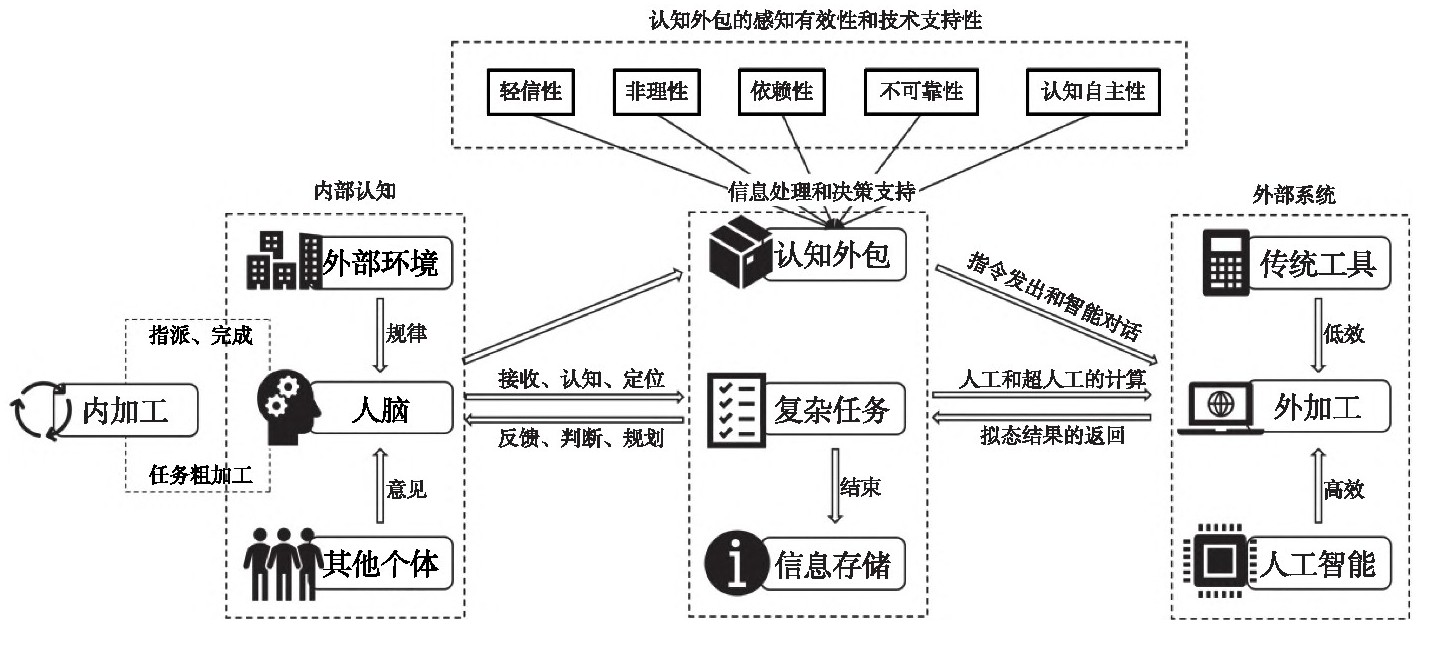
A more insidious harm is that information overload often leads to "pseudo-learning"—researchers immerse themselves in extensive shallow reading yet struggle to form systematic knowledge structures or original academic insights.
The Hidden Costs of Speed Worship
Academic Involution and Mental Health Crisis
The contemporary academic system's pursuit of speed has evolved into a systemic mechanism of "involution." The pressure to "publish or perish" forces researchers to continuously compress research cycles and maximize paper output. Multiple large-scale surveys show that depression and anxiety levels among researchers are significantly higher than in the general workforce, with PhD students facing particularly acute mental health issues—approximately one-third of current doctoral students report symptoms of anxiety or depression [482].
The inhibitory effect of speed pressure on innovation: Creative thinking relies on the activation of the default mode network, a cognitive state that needs to emerge gradually in a relaxed, stress-free environment.
The Spread of Shallow Thinking
The erosion of systematic thinking by a culture of rapid response is the most hidden cost of speed worship. The ubiquity of digital communication tools has created an "always-on" work environment where researchers are expected to reply instantly to emails and messages. However, cognitive science clearly indicates that deep thinking requires sustained time investment—Daniel Kahneman's "Slow Thinking" (System 2) theory emphasizes that complex logical reasoning, planning, and evaluation require concentrated attention, a process that cannot be accelerated or compressed [496].
"In recent years, my ability to focus has grown weaker, and my temper seems to have worsened, mainly due to significant erosion of patience," noted Wang Xiaowei, Professor of Philosophy at Renmin University of China, reflecting on his own experience using AI. [510]
"Less is More": A Philosophy of Precise Focus
Cognitive Strategies for Information Filtering
Establishing Knowledge Boundary Mechanisms
Core Literature Circle
Clearly define core theories and classic literature in the research field
Extended Literature Circle
Supporting theories and methods from related fields
Reference Literature Circle
Supplementary materials from peripheral fields
A Minimalist View of Tools
The "Occam's Razor" principle in tool selection—"entities should not be multiplied beyond necessity"—takes on special significance in an era of proliferating AI tools. Empirical research supports this minimalist approach: when researchers integrate AI tools into just 1-2 core platforms, cognitive load decreases significantly, tool mastery improves, and overall work efficiency enters an optimal range [508].
Tsinghua University Research Findings
"Core personnel intensively using AI + team sharing results" is currently the most cost-effective collaboration model. Compared to the "Multi-AI Team" model where each member is equipped with individual AI tools, there is no significant difference in core performance, but task efficiency increases by 12.8% [209].
The Art of Refinement in Prompt Engineering
Efficiency Advantages of Concise Prompts
Prompt engineering, as a key skill in human-machine collaboration, does not correlate positively with prompt length. On the contrary, verbose and vague prompts often lead to a decline in AI response quality—model attention is分散 across multiple ill-defined requirements, making it difficult to generate focused, in-depth outputs.
The "Less is More" prompting philosophy emphasizes information density and precision: conveying the clearest task definitions and constraints with minimal prompt length.
Methodology of Recursive Refinement
Compared to piling up complex prompts at once, iterative optimization strategies better align with the spirit of "Less is More". The recursive refinement methodology treats human-machine collaboration as a conversational process: initiating interaction with an initial prompt, evaluating quality based on AI responses, adjusting prompting strategies specifically, and entering the next iteration.
Essentializing Knowledge Architecture
From Accumulation to Compression
The deep practice of "Less is More" lies in a paradigm shift in knowledge management: moving from "breadth-first" information accumulation to "depth-first" structural compression. Building knowledge frameworks is central to this transition—researchers need to establish scalable, transferable cognitive structures that integrate discrete information points into organic conceptual networks.
Insights from Tiny Models
In October 2025, Samsung Montreal AI Lab published the Tiny Recursive Model (TRM), which, with only 7 million parameters, outperformed large language models with hundreds of billions of parameters on complex reasoning tasks [624].
Performance Comparison: TRM vs. Mainstream Large Models
| Model | Parameters | ARC-AGI-1 | Sudoku-Extreme |
|---|---|---|---|
| DeepSeek R1 | ~600B | ~35% | Not Reported |
| Gemini 2.5 Pro | ~1.8T | ~40% | Not Reported |
| TRM | 7 Million | 45% | 87.4% |
Data Source: [625]
"Slow is Fast": The Compound Interest of Deep Thinking
Dual Cognitive Systems and Research Decision-Making
Fast and Slow Thinking in Research Applications
Nobel Laureate in Economics Daniel Kahneman's Dual System Theory provides a cognitive science foundation for understanding "Slow is Fast." System 1 (Fast Thinking) operates quickly, automatically, and with little effort, relying on intuition and heuristics; System 2 (Slow Thinking) operates slowly, requires effort, is logical and computational, and handles complex reasoning and decision-making [612].
SOFAI Architecture Component Characteristics
S1 Solver (Fast)
- • Implicit knowledge base
- • Pattern matching response
- • Real-time low latency
- • Suitable for familiar patterns
S2 Solver (Slow)
- • Explicit knowledge representation
- • Multi-step systematic reasoning
- • Deep thinking with acceptable delay
- • Suitable for novel problems
Metacognitive Agent
- • Quality assessment arbitration
- • Dynamic scheduling decisions
- • Real-time evaluation optimization
- • Full-scenario coverage
Neuroscience Foundations of Deep Work
The trigger conditions for flow state highly overlap with environmental requirements for deep work: clear goal setting, immediate feedback, balance between challenge and skill, and crucially—undisturbed focused time [520].
Attention Residue Effect
Sophie Leroy's research shows that after each task switch, it takes approximately 15-25 minutes to re-enter a state of deep focus [607].
Long-Term Returns from Early Investment
The Blueprint Effect
The classic metaphor in construction engineering—"Construction without planning inevitably leads to rework and waste"—profoundly reveals the relationship between upfront investment and downstream efficiency. A reflective article on LinkedIn documented an experiment by a tech company manager:
Day 1: Haste
Launched 5 AI Agents for parallel development simultaneously, describing requirements only vaguely before starting. Disaster struck during integration—each Agent understood requirements differently, interfaces didn't match, data formats conflicted, and business logic was fragmented.
Day 6: Deliberation
Spent one hour first clarifying functional boundaries, interface specifications, and acceptance criteria, then launched the Agent Team. Actual output far exceeded the previous day, with almost no rework needed.
The more powerful the tools, the more important upfront thinking becomes [277]
Systematically Cultivating Focus
Environmental Design
Physical Space Distraction Isolation
- • Establish dedicated work zones
- • Reduce visual distractions (clean and minimalist)
- • Control auditory environment
Digital Minimalism Strategy
- • Turn off non-essential notifications
- • Limit email checking windows
- • Set designated "AI interaction periods"
Psychological Training
Mindfulness Meditation
Anchor attention to focal points like breathing; when mind-wandering is detected, gently bring attention back, directly exercising cognitive control abilities relevant to deep work.
Delayed Gratification Practice
- • Set "thinking waiting periods"
- • Establish "difficult tasks first" prioritization
- • Regularly observe "No-AI Days"
Optimal Boundaries for Human-AI Collaboration
A Clear Understanding of AI Capabilities
Current Performance Boundaries of AI
A realistic assessment of AI capabilities is a prerequisite for establishing effective collaboration. Current generative AI demonstrates exceptional abilities in pattern recognition, language generation, and information retrieval, but its performance boundaries are equally clear. The "hallucination" problem—AI generating plausible but factually incorrect content—is an inherent architectural characteristic.
When a materials science student used AI to compile research progress on "quantum dot materials," the system listed 27 references. Upon verification, only 3 actually existed, and none were relevant to the stated topic. [552]
Irreplaceable Core Human Capabilities
Problem Definition & Value Judgment
AI can optimize paths to given goals but cannot autonomously establish the legitimacy or priority of research objectives
Cross-Domain Association & Paradigm Breakthroughs
AI pattern recognition is based on statistical correlations, while humans can establish deep connections between seemingly unrelated fields
Ethical Considerations & Social Responsibility
Consequence assessment, value trade-offs, and accountability for research activities must be performed by human researchers
Hierarchical Design of Collaboration Models
Task Layering Framework
| Level | Task Characteristics | AI Role | Human Role | Typical Tasks |
|---|---|---|---|---|
| Automation Layer | Clear rules, high repetition | Full execution | Rule setting, spot checks | Literature formatting, data cleaning |
| Collaboration Layer | Requires iterative optimization, assessable quality | Generate suggestions, expand ideas | Guide direction, evaluate quality | Brainstorming, draft writing |
| Core Layer | High innovation, value-laden | Information support (limited) | Full leadership, ultimate responsibility | Problem definition, hypothesis generation |
Dynamic Adjustment Mechanisms
Project Phase Matching
- • Exploration: Active AI role, generating diverse directions
- • Focusing: Prominent human judgment, defining core problems
- • Execution: AI accelerates data processing and analysis
- • Integration: Deep human involvement ensuring theoretical coherence
Quality Checkpoint Setup
- • Mandatory manual review before finalizing research design
- • Assessment before forming major conclusions
- • Final review before paper submission
From "AI-Assisted" to "AI-Augmented"
The mature direction of collaboration models is shifting from viewing AI as an external tool to internalizing AI capabilities as an extension of the researcher's cognitive system, forming tighter "cognitive symbiosis."
Risk Management in Cognitive Outsourcing
Active Retention of Thinking Skills
The greatest risk of cognitive outsourcing is "disuse atrophy" of core thinking skills. When researchers habitually delegate literature reviews, data analysis, and writing polishing to AI, their corresponding capability modules gradually degrade due to lack of exercise.
Regular "No-AI" Independent Work
Handwriting mathematical derivations, coding core algorithms from scratch, writing paper sections without AI assistance
Using AI Output as Learning Material
Actively analyzing reasoning processes, identifying potential errors, considering alternative approaches
Establishing "Cognitive Exercise" Routines
Solving math puzzles, participating in programming competitions, engaging in academic debates
Maintaining Academic Integrity and Originality
Transparent labeling of AI-generated content is a basic requirement of academic integrity. Researchers should clearly indicate the specific stages and extent of AI involvement in papers, reports, patent applications, and other academic outputs.
Intellectual Property and Attribution
The current consensus is: AI systems, as tools, do not hold independent intellectual property rights; human researchers' selection, modification, integration, and verification of AI outputs constitute the foundation of their original contributions.
Practical Strategies and Action Frameworks
Operational Guide for Individuals
Designing Daily Research Rhythms
Protecting Morning Deep Work Windows
Strictly protect the 2-3 hour cognitive peak after waking as "Deep Work Time," delaying email and social media checks
Timed Quotas for AI Tool Usage
Set daily caps on total AI usage duration, establish "AI cooling-off periods," and conduct regular "AI audits"
Weekly "No-AI Day"
Choose one day to completely detach from AI tools, returning to traditional work methods to test independent working capabilities
Combining Slow and Fast in Project Management
| Project Phase | Core Characteristics | AI Intervention Strategy | Human Leadership Focus | Time Allocation Suggestion |
|---|---|---|---|---|
| Initiation | Problem exploration, direction incubation | Assist info retrieval, humans decide | Problem definition, method selection | 15-20% of total duration |
| Execution | Data collection, analysis processing | Full delegation, set quality checkpoints | Anomaly identification, direction adjustment | 50-60% of total duration |
| Closure | Fine polishing, quality control | Assist language polishing, humans lead content | Academic judgment, style consistency | 20-25% of total duration |
Institutional Construction for Teams and Organizations
Establishing Collaboration Norms
Shared Prompt Libraries & Best Practices
Compile verified effective prompts, collaboration workflows for typical tasks, and solutions to common problems into team knowledge assets
Coordinating Consistency in Cross-Member AI Use
Team-level tool selection and protocol formulation to reduce integration costs and support smooth collaboration
Balancing Knowledge Sharing and Individual Focus
Establish an "async-first" communication culture and set team norms for "focus periods"
Adjusting Evaluation System Orientation
Shifting Metrics from Quantity to Quality
Value representative works over total paper count, introduce long-term impact assessments, recognize the intrinsic value of deep work
Recognizing and Protecting Deep Work Time
Reduce administrative tasks and meeting encroachment, establish "No-Meeting Days" or "Focus Blocks"
Optimizing Weighting of Long-Term Value vs. Short-Term Performance
Extend evaluation cycles, recognize "slow research" projects, tolerate reasonable exploratory failures
Meta-Abilities for Continuous Evolution
Balancing Tech Sensitivity and Critical Thinking
New Tool Evaluation Framework
Necessity vs. Novelty: What specific problem does this tool solve? Do existing tools already meet the need? Does the learning cost match expected benefits?
Learning Investment ROI Analysis
Prioritize foundational skills with high leverage effects; be cautious about specialized skills for narrow application scenarios
Regular Tech Stack Review and Streamlining
Comprehensively review tool configurations quarterly or semi-annually, eliminating low-value tools and consolidating overlapping functions
Maintaining Cognitive Flexibility
Dynamic Balance Between Adapting to Change and Adhering to Core
Clarify personal "core competency circles" and selectively expand boundaries around the core
Transitioning from "Knowing More" to "Understanding Deeper"
Invest more cognitive resources in refining core concepts and establishing cross-domain connections
Pacing in Lifelong Learning
Adopt a "wave-like" learning pattern, alternating between high-intensity learning phases and digestion/integration phases
Conclusion: Returning to the Essential Value of Research
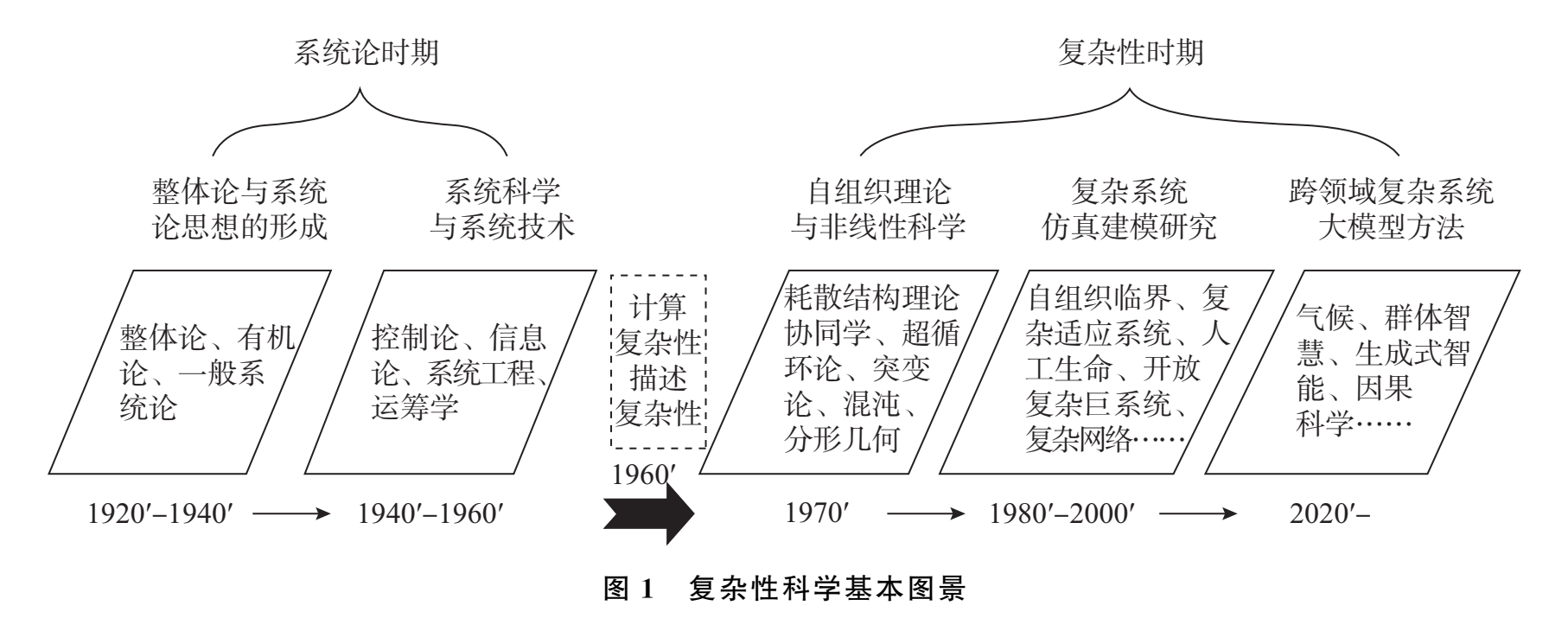
Pursuits Beyond Speed
Intrinsic Satisfaction of Knowledge Creation
When researchers immerse themselves in truly important problems, experience the cognitive leap from confusion to insight, and feel the aesthetic pleasure of ideas taking shape—these intrinsic rewards constitute the core meaning of academic life.
Patient Exploration of Truth
Significant scientific discoveries are rarely born under hasty pressure; they require time for incubation, accumulation of failures, and seemingly "inefficient" wandering. Zeng Guofan's approach to scholarship: "Do not read the next sentence until you fully understand the previous one." [431]